
The Weakest Case in the Room: A Narrative Audit of Chris Bohjalian’s The Amateur
Category: Narrative Audits / Legal Thriller
Content note: The Amateur addresses addiction, the sexual exploitation of a minor, and suicidal ideation. These themes are handled with care and intention — but they are present, and they are heavy.
There is a specific kind of prosecutorial decision that every criminal defense investigator eventually learns to recognize. It does not originate in evidence. It originates in pressure — media cycles, political optics, personal grievances wearing institutional clothing. The charging document looks like justice. The case file tells a different story.
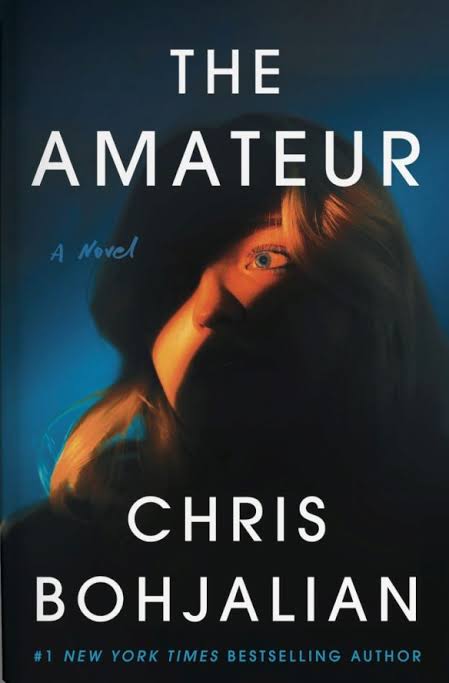
Chris Bohjalian’s The Amateur is the first novel I have read in years that understands that distinction at a structural level. Not as backdrop. As architecture.
The Wonderful Facts: What Actually Happened
The inciting incident is, by any clinical definition, a freak accident. Mira — golf prodigy, country club member, deeply complicated human being — drives a ball into a practice net. The ball breaks through. It strikes Kenny, a classmate and caddie, in the head. He dies.
That is the case. That and circumstantial evidence are the totality of the physical evidence against her.
What the DA constructs is something else entirely — a narrative built on circumstantial inference, the allegation that Mira tampered with safety equipment, and a community predisposed to believe the worst about a girl they had already decided to condemn for other reasons.
As someone who spent over a decade building and stress-testing exactly these kinds of evidentiary chains in criminal defense work, I want to be direct: this prosecution is thin. Not dramatically thin. Professionally, documentably thin. The kind of charging decision that is made when external pressure or another force exceeds internal prosecutorial discipline.
Bohjalian gets this right. That alone is worth noting.
The Limp in the Code: Systemic Contamination
What makes The Amateur more than a legal thriller is its precise accounting of how a weak case gets strengthened by everything surrounding it. Mira’s relationship with an older man at the club — initiated when she was fifteen, which is not a relationship, it is exploitation — becomes public knowledge after the accident. The man’s wife, socially connected to the DA, files for divorce. The community reframes Mira’s victimhood as predatory behavior. She is labeled a homewrecker. A bad influence. A girl who probably did it.
This is institutional hubris operating at full efficiency. The legal system does not exist in a vacuum. It breathes the same air as the community it serves, and when that community has already rendered its verdict, the prosecution becomes a formality with paperwork attached. The damage that follows — the addiction, the self-destruction, the suicidal ideation — is not a character arc. It is a damage report on what happens when every system that should have protected a kid fails, repeatedly and completely. Bohjalian maps this contamination without editorializing. He simply shows you the mechanism and lets you watch it run.
The Architecture of the Narrative: Confessional in Disguise
The structural choice Bohjalian makes with point of view is the most interesting thing about this book technically. Mira narrates in first person — but she breaks regularly into second, addressing the reader directly. Not metaphorically. Deliberately. She is deposing you. Treating the reader as a juror who needs to hear her side before the court gets to frame it.
It should feel like a gimmick. It does not, for one specific reason: Mira is already, by the time she narrates, an accomplished novelist. The book presents itself as memoir — and she says so explicitly at points — but it reads as something closer to a confessional. The distinction matters. A memoir is curated retrospection. What Mira is doing feels more like testimony under oath, shaped by someone who finally found the craft to say what happened to her and is determined to say it accurately before the record closes. The second person asides do not break the fourth wall so much as they acknowledge it was always there — and that the reader, whether they like it or not, is sitting in the jury box.
On “Unlikability”
There is a strain of literary criticism that reaches for “unlikable protagonist” the way a less imaginative reader reaches for a bookmark — as a way to stop engaging without having to say why. I want to address it directly here because I have seen it applied to Mira and I think it misreads the book at a fundamental level.
Mira is a teenager. She enters this story already carrying the weight of exploitation by an adult who absolutely knew better. By the time the accident happens, the community that should have protected her has instead handed her a second set of charges she never faced in any courtroom — the social verdict, rendered without evidence or appeal. Her subsequent struggles are not character flaws on a ledger. They are what survival looks like when the floor has been removed repeatedly and nobody stopped to ask who removed it.
Reading that as unlikability is a failure of empathy dressed up as literary criticism.
The Courtroom and What Finally Breaks
I will not detail the resolution beyond what is necessary. What I will say is that the twist does not feel engineered. It feels inevitable in retrospect, which is the only standard that matters for a courtroom revelation. A secret held out of grief and loyalty finally surfaces when the injustice becomes too visible to absorb in silence. The person who breaks is not a dramatic choice. It is a human one. And in a book full of systems behaving exactly as badly as systems can — that single human choice lands like a window opening in a sealed room.
The Final Entry
Mira is not asking to be liked. She is asking to be seen accurately — which is, in the end, all any defendant ever asks of a jury.
4.25 Stars!
Bohjalian filed a tight case, built a devastating one, and delivered a verdict that earns every page of tension that preceded it. The Amateur belongs at the top of the ledger.