
The Analog Resurrection: Why Ghost Fleet is the Ultimate Warning for 2026
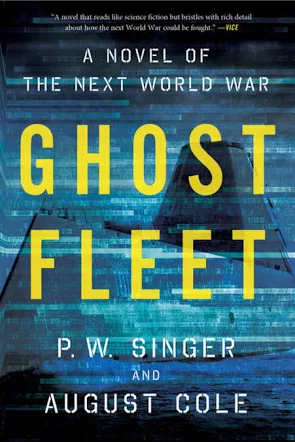
I recently closed the back cover of Ghost Fleet: A Novel of the Next World War by P.W. Singer and August Cole, and I’ve been sitting with a specific realization: The more “perfect” we make our systems, the easier they are to break.
I’d give it a solid 4-star rating. It’s a book that feels less like a traditional novel and more like a declassified “What-If” manual for the Pentagon.
The Prescience of the Tech
Writing about near-future tech is a dangerous game for an author. By the time the book hits the shelves, the “future” has usually already happened. But Singer and Cole, who are experts in 21st-century warfare, managed to hit the bullseye.
Reading it today, the “VIS” tactical glasses and the sophisticated, swarming drone use don’t feel like sci-fi; they feel like the morning news. While a few political details from 2016 might feel slightly dated, the hardware is terrifyingly current. The authors used real-world patents to ground the story, creating a sense of authenticity that seems rare in the genre.
The Cost of Hubris
The overarching theme of Ghost Fleet is Hubris.
- The U.S. Hubris: At the start of the book, the United States is blinded by its own technological superiority. We believed our “Code”, the F-35s, the complex satellite networks, were invincible.
- The “Limp”: We found out too late that our most advanced weapons were built with compromised components. The supply chain was the “limp in the code” that brought the entire machine to its knees.
The Analog Resurrection
This is where the book truly shines. When the high-tech, microchip-dependent systems fail, the characters are forced into what I’m calling the Analog Resurrection.
They have to go back to the “Ghost Fleet” (the old, mothballed ships and manual systems that don’t rely on microchips or internet connections). They have to fight with grit, old-school navigation, and hardware that is “dumb” enough to be unhackable.
It’s a direct dialogue with A Canticle for Leibowitz. Both books argue that when the “shiny tools” of a civilization fail, we are saved by the things we nearly threw away. In Canticle, it was the monks saving the books; in Ghost Fleet, it’s the sailors saving the old steel.
The Misfit Specialists
Like any great military thriller, you’re hit with a flood of perspectives early on, from hackers in Hawaii to billionaires on yachts. It can be disorienting, but once you connect with the crew of the USS Zumwalt, the stakes become personal. You start to see the war not as a map of dots, but as a series of human choices made under impossible pressure.
THE VERDICT: Ghost Fleet is a cautionary tale about over-engineering. It reminds us that in a world of “perfect” algorithms, the most dangerous weapon is the human who knows how to operate when the screen goes dark.
The Question for the Comments: If the grid went down tonight, what “analog” skill or tool do you have that would actually still work?