
Cracking the Social Code: Reflections on Walter Mosley’s “Devil in a Blue Dress”
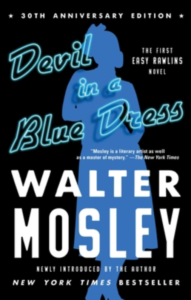
I recently revisited a titan of the genre: Walter Mosley’s Devil in a Blue Dress. While many categorize this strictly as “Hardboiled Noir,” reading it through the lens of my own work—specifically the themes of institutional control and hidden “limps in the code”—revealed something much deeper than a standard detective story.
The Architecture of the Outsider
Set in 1948 Los Angeles, the novel follows Ezekiel “Easy” Rawlins, a Black World War II veteran who has just been fired from his job. To save his mortgage, he accepts a job from a shady white man to find a missing woman.
What makes Easy such a compelling protagonist for me is his role as a “decoder.” He is navigating a post-war America where the rules are unwritten but absolute. He has to translate himself between the dangerous streets of Watts and the high-power offices of white Los Angeles. He is a man who survives because he understands the “system” better than the people who built it.
The “Complicity” of the System
In our recent discussions about Percival Everett’s The Trees, we talked about the “incompetence and complicity” of local power structures. Mosley was exploring this decades earlier. In Devil in a Blue Dress, the “mystery” is often secondary to the revelation of how corrupt the social architecture truly is.
As a writer who explores how systems—be they military, religious, or algorithmic—attempt to delete individual identity, I found Mosley’s portrayal of Easy’s struggle to remain “un-deleted” incredibly resonant. Whether it’s Major Elias Kael in Protocol Heresy or the characters in my forthcoming work, there is a shared DNA here: the “misfit” who realizes the only way to win is to find the glitch in the institution’s logic.
A New Kind of “Extractor”
Reading Mosley has been particularly timely as I develop a new project. I’m currently deep in the draft of a contemporary thriller featuring a different kind of investigator—a man who was born into a high-control system and escaped, and now uses his intimate knowledge of “the language of control” to help others get out.
Like Easy Rawlins, this new protagonist isn’t a traditional “tough guy.” He’s a psychological operative. He understands that people aren’t just trapped by walls; they are trapped by narratives.
Easy Rawlins has to navigate the racial and legal codes of the 1940s to find the truth. My new protagonist has to navigate the “codes of belief” used by modern cults and high-control groups to extract those who have been “erased” by a charismatic leader.
Final Verdict
Devil in a Blue Dress is more than a mystery; it’s a study in how an individual maintains a soul while navigating a soulless system. It’s a 5-star masterclass in “Smart Noir” that reminds us that the most dangerous cages are the ones we can’t see.
Are you a fan of the “detective-as-outsider” trope? Let’s talk about your favorite genre-defying PIs in the comments.