
The Ledger of History: Why Every Satirist Needs to Read Percival Everett’s “The Trees”
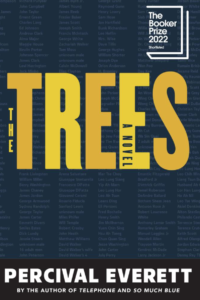
I recently turned the final page of Percival Everett’s The Trees, and I’m still sitting with the weight of it. As an author who explores the friction between institutional culture and individual identity, I found this novel to be a profound masterclass in tone, purpose, and the “codes” of justice.
The Anatomy of a Reckoning
On its surface, The Trees is a police procedural set in Money, Mississippi. But Everett quickly peels back the skin of the “mystery” to reveal something far more visceral. When the bodies of white men begin appearing alongside a corpse that looks suspiciously like Emmett Till—only for that third body to vanish from morgues—the book shifts from a rural noir into a supernatural reckoning.
The Satire of Incompetence
What struck me most—and what resonates with the themes I explore in my own work—is Everett’s use of the absurd to highlight systemic rot.
The local law enforcement in The Trees are depicted with a biting hilarity. Their incompetence isn’t just a punchline; it’s a mask for their complicity. It reminded me of the “institutional blindness” I’ve written about in Protocol Heresy—the way systems protect themselves by refusing to see the obvious truth right in front of them. Whether it’s a corrupt military chain of command or a small-town sheriff’s office, the “limp in the code” is the same.
The Masterclass in Tone
As a writer, I often grapple with how to start a story in a place of humor and absurdity before pulling the rug out to reveal a darker, more serious core. Everett does this with terrifying precision. He makes you laugh at the sharp, witty dialogue of the Black detectives in one chapter, only to confront you with a literal archive of historical lynching in the next. It’s a masterclass in the “Absurd to Dark” pipeline.
Where the Archive Meets the Future
The ending—centered around Mamma Z and the relentless sound of a typewriter recording names—is a haunting metaphor for the “ledger of history.” It suggests that the past isn’t a closed file; it’s a living document that eventually demands a signature.
This concept of “the archive” is something I’ve been thinking about a lot lately. In my forthcoming satire, The Gospel According to P.O.L., the archive is digital and algorithmic—a data-harvesting machine. In a new project I’m currently drafting, the archive is psychological—the “language of control” used by charismatic leaders to erase a person’s history.
In The Trees, Mamma Z asks if she should “stop it.” Her decision to let the record play out is a reminder that we cannot delete our history without a reckoning.
Final Thoughts
For those who follow my work, you know I’m fascinated by how we lose our human identity to institutional mandates. The Trees is the ultimate exploration of what happens when a culture tries to “delete” its data, only to have the deleted files “rise” back to the surface.
Verdict: 5 Stars. It is graphic, uncomfortable, and absolutely essential for anyone interested in the power of “smart” satire.
How do you feel about “mystical” endings in otherwise grounded thrillers? Does the supernatural element help or hinder the message for you? Let’s discuss in the comments.